
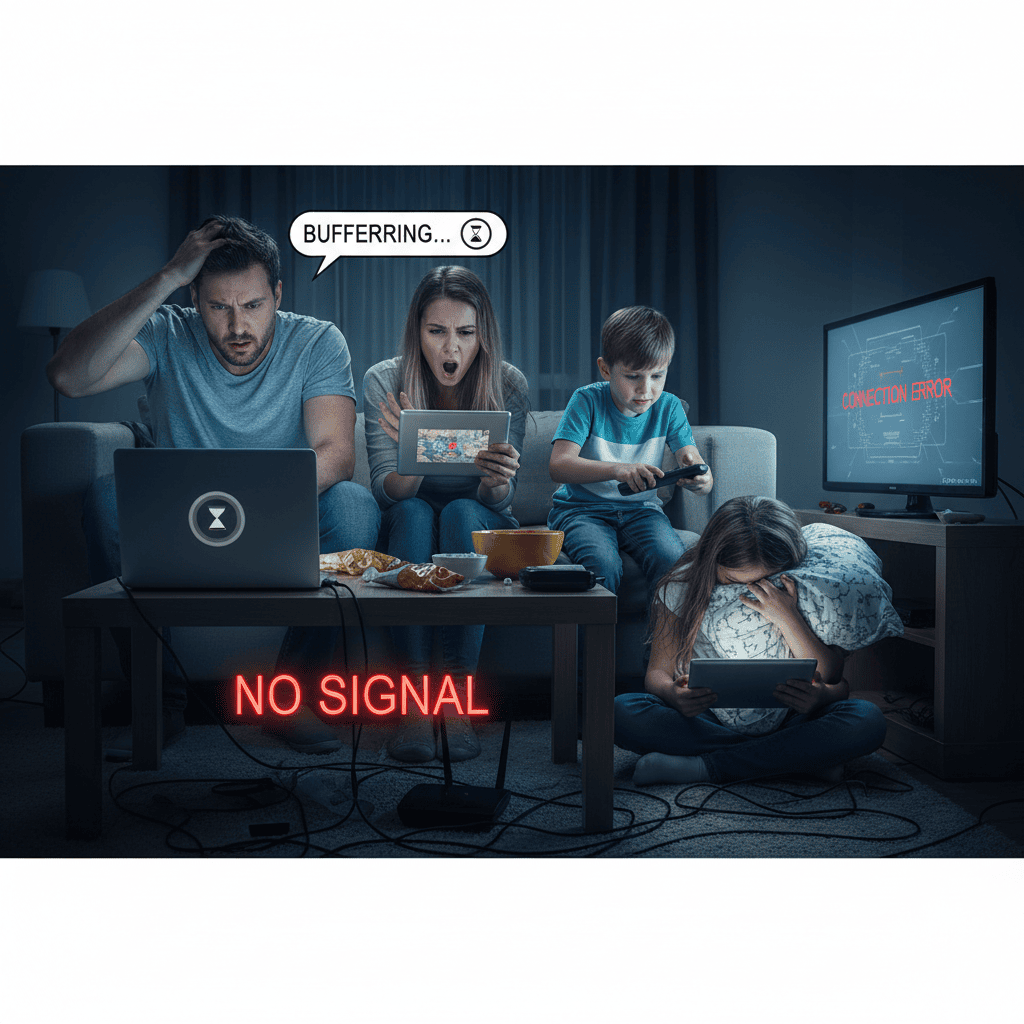
You know that feeling, you’re in the middle of a movie night, your favorite scene’s coming up, and suddenly… buffering. Or worse, you’re on a Zoom call, and your boss freezes mid-sentence while your Wi-Fi gasps for signal. If that sounds familiar, welcome to the world of Wi-Fi dead spots, the invisible enemies hiding in American homes everywhere.
But here’s the truth: it’s not just your Wi-Fi’s fault. It’s your internet foundation. And the real fix might start with upgrading to fiber internet.
What Exactly Are Wi-Fi Dead Spots?
Why Fiber Internet Solves the Problem
Lightning-Fast Speeds: Fiber delivers symmetrical upload and download speeds so your Netflix, gaming, and Zoom calls all run smooth.
Stronger Signal Distribution: Fiber provides a more stable feed to your router, improving Wi-Fi range and reducing dead zones.
Better Compatibility with Mesh Systems: Mesh Wi-Fi setups thrive on stable fiber connections, giving you seamless coverage from attic to backyard.
Future-Proof Connection: Whether it’s smart home tech, 8K streaming, or AR glasses, fiber is ready for the next generation of devices.
How to Fix Wi-Fi Dead Spots at Home
Before calling your provider, try these home-based tips to make the most of your setup:
The American Fiber Revolution
More Americans are cutting ties with old copper lines and moving to fiber. Why? Because they’re tired of buffering, lag, and expensive “upgrades” that don’t deliver. Fiber isn’t just for big cities anymore. From suburban neighborhoods to rural towns, fiber-to-home internet is becoming the gold standard for speed, reliability, and quality of life.
If your home still struggles with Wi-Fi dead spots, it’s time to look beyond your router and straight to your connection. Your internet should move as fast as your life does. And that’s where CPOA Global’s Residential Fiber Internet comes in, delivering Ridiculously Awesome Connectivity for American homes that demand more. Say goodbye to Wi-Fi dead zones and hello to smooth, stable, everywhere internet. Because with fiber, the signal doesn’t stop, and neither do you.